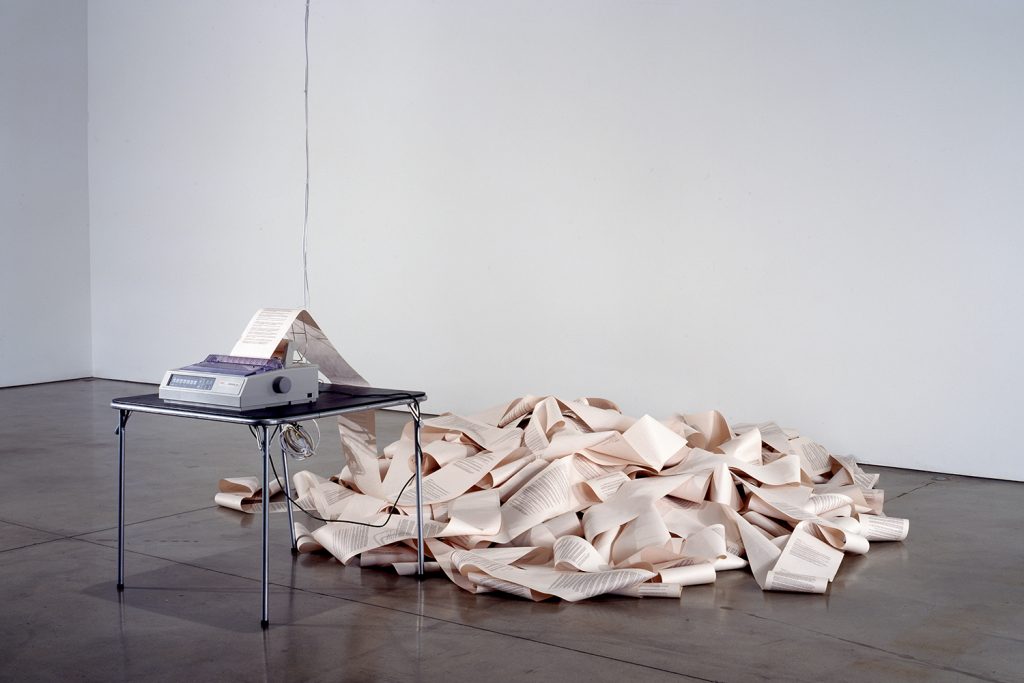
News, 1969/2008
Program for the Artist as a Formal System: Towards a General Theory of Art
For the past few years I’ve been engaged with writing a footnote to an essay with a theoretical explication of what is meant by the word “art”. For a much longer time I’ve pursued a very abstract but also very specific direction in practice of art – like any other artist. This one little trick I have discovered is to abandon your own taste in favor of a more objective, general view of potential experiences and the conditions on which they are possible. What comes out of this pursuit is no less than an attempt at a general art theory: one without reduction, but also necessarily abstract and high level to be applied to every pursuit which falls under the category of artistic, but exceeds the idea of perfect craftsmanship. This text presents an outline or rather a program for answering the questions such as “how is art possible” and “what can art do”, with the aim of providing a critical perspective on the actual state of the field and finding a way past that.
1. Defining art
Let’s get an important point out of the way: art is not a quality, it is a social context within which we put human made artifacts. As such, there is no art outside of social conditions making it possible. This definition is necessary, not simply to accommodate sensibilities of contemporary fine arts, but also to fit the entire plurality of artifacts, situations, industries, disciplines, movements and eventually experiences which constitute the history we mean by the term of art.
“Beauty” is a general word for every aesthetic effect we expect from good art, but also something we assume is there even if we don’t see it, as an inherent quality of everything that is labeled artistic. There was a time when codifying beauty and many more effects was a matter of precise taxonomy, tables, systems of tastes, manners or prescriptive mechanics of poetics. But we are long past the stage of static definitions, although arguably taste is still woven into the fabric of our social relations as a manifestation of values we seek to identify with.
Art, any art is expected to have poetic qualities. Poetry signifies an abstraction, a coming together of discrete parts into a new whole. Poetry is a possibility of building or discovering a new, imaginary or counterfactual world. The way elements of poetry interconnect can be called “chains of reasoning”, since a single work allows for consistent repetition of certain relations among its materials as elements – but not others. As Longinus has long stated in an essay “On Sublime”*1, when we are led by author to follow a chain of reasoning to the end of the argument and are able to reach so a summit of new thought, we feel as if we made the path of reasoning together with the author, and gazing back at the path we experience a feeling called “sublime”.
*1– See Poetics. Longinus: On the Sublime. Demetrius: On Style (Loeb Classical Library No. 199)
What else is there to know about art? To go beyond those basic aspects we would need to look into the history of different movements, to consider many strands of interpretation of a single work to understand what is the work itself or simply gesture at art, exemplify it through poetic writing. Attempts to figure art out have been hopelessly stuck in this Benjaminesque approach for long, to the point that poetic writing has become an entrenchment tool for the defense of irreducibility of art and human experiences, and so preservation of the status quo of its “circulatory system” – its institutions.
We can go much further than that, without dissolving art into naturalized cultural affects or cognitive cues, but also past the limits of poetic language and without prescription for what is art proper and what isn’t. To do so, I need to consider what kind of objects are artworks.
The notion of an object in the mundane sense crumbles almost immediately if we consider that art is not only a painting or a sculpture. It is also a novel, a dance, a concert, a record, a performance, a never written down poem. The form of an object is a mere pragmatic and linguistic convenience, contingent on a very recent history of art, prior to which artworks were not at all discrete, portable objects. A more fitting definition is that of a discrete pattern. The parts which come together to create something new, the elements of poetry arranged by an artist, most often in a material form, using physical materials or linguistic elements, but in a way that makes our perception of such patterns give rise to more complex associations. It is discrete, because there is a border between conditions arranged by an artist and those of the context of art presentation. Both are abstractions conditioned by circumstances only some of which are material. Therefore an artwork is a discrete pattern of abstraction. If art is any kind of object, it is an abstract one, which is difficult to pin exactly despite its physical form being trivially simple. But it is a very specific combination of elements that makes some things good art and others a mere repetition of conventions.
2. Making and seeing as two sides of one coin
Making art and seeing it are two sides of one action. It is impossible to remove either figure from art and this is counting artists as their own, first or only audience. But it is possible to hide both author and audience, for example through deferring to channeling a particular style, genre, tradition or as in recently popular “complex systems art” where the author is present as an engineer designing an exhibition machine through arranging the conditions, which hopefully produce experiences leading to inferring meanings.
The author is also present in an anonymous fragment of an ancient poem – a torn papyrus with a pattern of words arranged on by Sappho. Our reading of it is more than automatic application of the Rebus principle connecting the dots among the flux randomly. The fragment is written in a language of a culture, representing the movements of thought and feelings intelligible to Sappho’s contemporaries. They saw the same sunsets, shared concepts, ideas, beliefs and had experiences similar enough one could point at them with a mere gesture of a poem. They felt similarly and so the poem was meaningful to more than its author.
If any work was ever seen outside all contexts, suspended in total ambiguity, then we could speak of freedom of interpretation and death of the author, but we would not be able to read that work. And if we can describe what constitutes a work of art, we should not assume it is a machine which needs no agency to drive it.
Concepts, institutions, artistic and political movements can be described structurally independently from individuals, but they are not created or put in motion without the motor of agency moving along the lines either of such structures prescribes or offers. Yet they are real in the sense of our ability to live and act accordingly, as well as agree, somewhat, on defining them intersubjectively.
Art hardly ever appears to us outside social conventions, because art itself is a convention, a niche which preserves authorial intentions. But not the message. Instead, it offers a collection of mental instructions from which associatevely a whole spectrum of messages could be inferred. For this to be possible, art is neither autonomous nor universal, but bounded and constituted by rules of which society is woven.
And yet, despite the consensus that art happens inside the mind of audience, while the author arranges the pattern which makes this possible within a context often maintained as physical venues manifesting the continuous tradition of presentation within a particular discipline, we tend to think of artworks as objects existing without our firsthand experience of them. We may even concede that something is there, but we don’t understand it, are unable to access it. Even without deep knowledge of their oeuvre, one can easily discern between the music of Iannis Xenakis and Suzanne Ciani.
As Gabriel Catren reminds us*2, what is there aren’t abstract objects qua phenomena – objectively, for these are constructible and dependent on cultural conditions of rules maintained socially. What is there are the transcendental conditions within which such abstract objects are possible downstream from the fact we share similar sensors, language, etc, resulting in similarity across our individual transcendental structures which are the result of pressures of the external environment. It is the conditions that are objective and are subject to revision, hence we can play with premises of our mental conditions. Is an artist necessary for this?
*2 – See Pleromatica or Elsinore’s Drunkenness by Gabriel Catren in BREAKING THE SPELL: Contemporary Realism under Discussion Ed. Sarah De Sanctis and Anna Longo (Mimesis International, 2015)
We can certainly have pleasant aesthetic experiences outside of the context of art, experience wonder, beauty, disgust without artworks. But artworks extend our palette of such experiences by providing blueprints for new arrangements. If the logical dimension of thought is limited by our experiential conditions, then art making is akin to building further possible experiential conditions, piecemeal, through using tools and mechanics that akin to logic are able to reach beyond the horizon of human imagination. That is exactly why artifice induced experiences of artworks are different from those of finding patterns in nature – the latter are always within the limits of our existing experiential blueprints, while the former are able to strike outwards and outside of the limits of imaginable. Hence the necessity of artists for art and the interdependence of seeing unto making, and vice versa.
3. The language of making art
Hermeneutics – discursive interpretation are second order effects of art that feed back into the way we see things. But overcoming the difficulty of describing an abstract object constituted by a pattern requires a language local to art that is a first-order discourse. Neither naturalizing nor explaining the effects of art away is helpful for making it, thus such a pragmatic language is half invented, half picked up by artists through speaking to each other. The true value of education in art is in easing into such a conversation which gradually becomes a blueprint for the way one thinks and organizes one’s practice. Of course, no person holds to one schema for making decisions in their life in all spheres and artists don’t have “shop talk” in just one manner. I discern three distinct discursive practices on making and speaking about art:
- Formal schematism: description of an artwork through combination of materials, where the juxtapositions and connections are justified and grounded either by existing works, objects, materials or by technical necessity of constructive decisions (such as necessity to use nails in holding two pieces of wood together). Most useful as an approach within a group, it offers clarity of existing examples or material gestures (a whistle like this whistle, a hum like this hum, a dance move like this one). Hence the wide adoption of this approach in art education as well as in commercial production.
- Mood implication: a form of dialogue in which either party understands the work to be a combination of elements which hypothetically elicit a response from the audience, thus shaping its meaning. It sounds like this: “If you do X, the work would feel like Y.” Essentially a conversation about actual and possible moods of the work, this type of discourse about ‘vibes’ requires both parties to interpret abstractions somewhat similarly. “This work reminds me of such and such a moment in childhood” requires a shared background, at least on some level, which is why such conversations easily arise within art schools, but are more difficult to establish outside relationships built on proximity for an extended period of time.
- Narrative approach: to look at history, biographies, interviews and attempt to distinguish a narrative of an artist or a recipe of an artwork. Ideally it would be an algorithm of steps one could follow despite different lives and contexts. Much like an attempt to learn lessons from life, here someone else’s life is understood as a historical pattern of decisions, contingencies, ideas and practices developed within their constraints. A small, but significant issue with this approach is the conflation of figures of an artist and real historical individual, thus establishing a direct causality between the artworks and personal anecdotes.
Of the three approaches only Formal schematism comes close to being systematic and codified. It is indeed the language of group crits in art schools, of applications for grants, residencies, of explanations in public talks, exhibition texts. Justification of decisions through the way the work is built, where decisions are made either because it was necessary on technical level or because there is a certain artwork that had a similar problem-solution conjunction, is ultimately codified in a moodboard – a list of references which becomes a palette of possible decisions. However, saying that “I made X like this because Y is like this”, where Y is an existing artwork, also points at the idea of autonomy of art where art is built in reference to other art, giving rise to aspiration of art to become its own language. The price to pay for such aspiration is in transformation of “artistic” into “combinatorial” (art comes out of art, like literature is made of literature) which becomes a closed volume of possible, an artistic imagination limited to iteration. But it is merely a tip of an iceberg for artistic practice, distinguished by the availability of rhetorical tools for its articulation. And yet, it also becomes the mode of productive thought, not only the way of describing it in public.
In other words the way we learn to speak of something is also the blueprint, the heuristic for how we arrange our workspace, organize a research, choose what to look for inspiration and so program ourselves, the skills we choose to learn or not, the tools we pick – all that constitutes artistic practice. This is precisely what a narrative approach is about, to import wholesale not only a recipe for one work distilled from another artist’s life but the whole set of conditions of possibility for such works – the way that preexisting artist has already arranged their life. It may appear as deeply problematic to imitate not an approach to making an object, but a whole lifeform, yet it appears to resolve the inherent issue of overwhelming complexity of life’s circumstances and the need to make the right decisions among them, in order to make an artwork.
And the alternative to the attempt to wear someone else’s skin is to stick to a mood while making a work, as a way to navigate that complexity. However, this part of art making remains the least explicated, albeit most pragmatic approach. It also immediately closes the ability to speak about it, entailing an intuitive approach of “thinking through hands”. One only needs to get into a mood and stick with it, and the work made will be the result of that mood, it seems. Therefore speaking about an artwork in progress, we can talk about moods it actually, possibly creates and from this infer what to do in order to change a different direction – by changing one’s own mood, I change my approach to what I’m making. All of this is awfully speculative and even in written form sounds far more intangible than in practice. Practice itself requires arrangement of all three modes of thought into one, but this is often an unconscious process resulting in arrangement of one’s own workspace (and workplace) in a contingent manner. And whose mood is it anyway that the artist’s gut feeling intuitively follows?
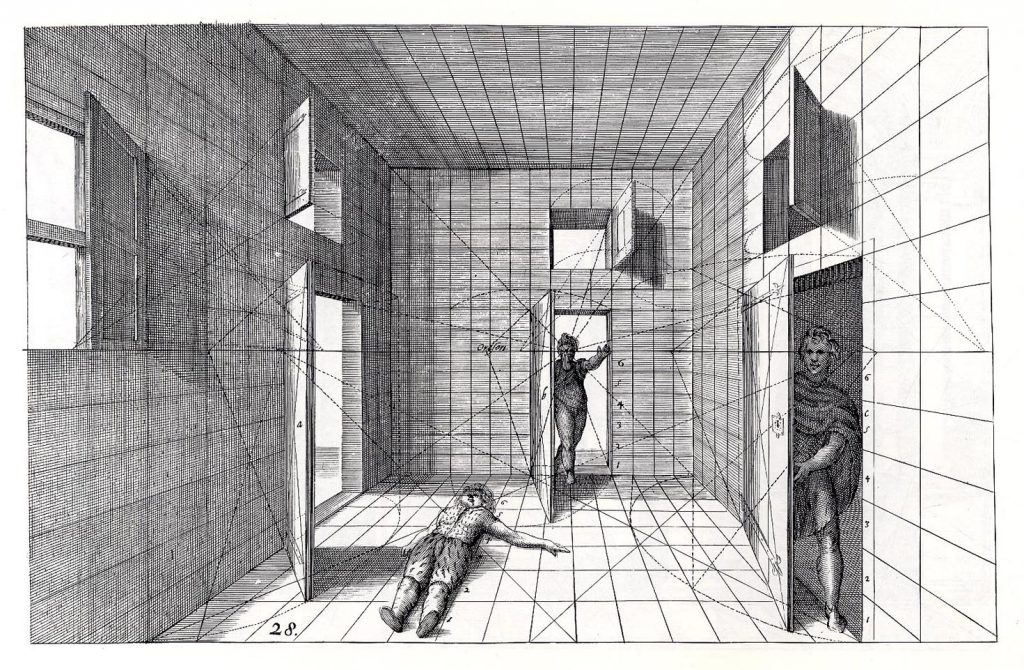
Hans Vredeman de Vries, Perspective, part I: plate 28, 1604
4. Seeing, mood, vibe, aesthetic.
It merits then to return to that other part of the equation of art – seeing it. Whatever the expectations of art are, it falls short if it isn’t noticed as being specific, if it does not provide an experience that stands out, a particular taste. The aesthetic, the mood, the atmosphere, the vibe denote roughly similar phenomena, though each term comes with its own genealogy and connotations. If an artwork, regardless of its medium, makes us feel and think in a specific pattern of associations, such a pattern becomes an acquired taste for the mood of that work. In this view artworks are patterns which produce patterns. An artwork is an object only because of its culturally defined substrate as a discrete, singular object and because we can discern a distinct experience – of which we can’t help but think of as an object.
It’s the Kantian idea that we may not perceive the thought independent world except through slicing it with the categories of intuition, in other words we cannot but automatically think of objects as constituted by the qualities we can perceive aesthetically: through vision, touch, hearing, smell. Aesthetics here are the channels of our perceptive apparatus and so the most outstanding qualities – aesthetic ones, of the objects in the world are such that they can be perceived by us. And although we can think using non-perceptive, non-sensual categories, our primary apparatus is to think of even imaginary objects as objects, meaning that our thoughts in general are encoded through the “channels” of our aesthetic faculties of sight, hearing, touch, smell. The notion of an economically compressed, folded information structured through continuums of our perceptual categories represented and navigated as a high dimensional manifold is vividly developed further by Peli Grietzer in his work on vibe3. A vibe – a particularly economic structure of the manifold of sensibility, is most saliently demonstrated within the field of machine learning models, where an agent could be represented as an autoencoder and retrieving a particular image from memory can be seen as reference to a particular vibe. Machine learning models also show that many more dimensions can be considered than those outlined by Kant (and so, Aristotle), which also means more categories than just those which represent our sensory continuums. Mechanized imagination, prosthetic extension of our reasoning and productive capabilities exceeds the limits of what we can imagine given our intuitive faculties. A vibe can be expanded, decoded or unfolded into a deeply complex framework of associations, yet it is compact itself. In popular use, vibe has the similar function of being a shorthand for mood range that encompasses multiple cultural artifacts e.g. noir vibe. Every vibe is constituted by a specific selection of elements and so, one could say, it is a curated selection of associations that can be summed up by one mood. This approach also points at the idea that our imagination could be modeled topologically as a riemannian manifold, which begins in Plato with interpretation of dialectics as the weaving process conjoining the sensory continuums as shown by the scheme of the Divided Line and Cave Allegory, codified by Kant and numerous scholars, poets and philosophers since (Kitarō Nishida, Paul Valéry, Stéphane Mallarmé come to mind).4
*3 – See A Theory of Vibe (http://www.glass-bead.org/article/a-theory-of-vibe/?lang=enview) by Peli Grietzer
*4 – note how the idea of compressing complexity within a vibe is reliant on structuration of the world that is being encoded, which means both the thought independent world as perceived and the world of thoughts. There is a bifurcation here which forces us to choose either a phenomenology of the world structure being grasped through aesthetics, or a linguistic structuration where natural language plays the primary role of providing the surrogate inferential framework for the world with which we primarily interact and reference, and of which phenomena are the second order effects. I tend to hold the latter position. For more on necessities of inferential framework within art see On Constitutive Dissociations as a Means of World-Unmaking: Henry Flynt and Generative Aesthetics Redefined by J.-P. Caron https://www.e-flux.com/journal/115/374421/on-constitutive-dissociations-as-a-means-of-world-unmaking-henry-flynt-and-generative-aesthetics-redefined/ as well as Caron, J.-P. (2021). Place and Scale. Cosmos and History: The Journal of Natural and Social Philosophy, 17(2), 162–184. Retrieved from https://www.cosmosandhistory.org/index.php/journal/article/view/991
I find “vibe” to be a more useful term than “mood” and a more fittingly artificial one. Where mood signifies a state of a human individual and points at the state machine-like public signal apparatus of emotions (I feel like X=I communicate X=I am in the state X), vibe is both less subjective and less anthropomorphic. When it comes to art, a mood is induced like an effect of an artwork, it implies near automatic pavlovian reaction to stimulus, which is absent in real life; whereas a vibe is inherited like a choreography for thoughts from the artwork, where it was originally put by the author. As such, physical objects can have vibes because their aesthetic qualities can be read as a pattern which produces affective responses. This pattern can be described without directly experiencing it as well, for example through language, but not necessarily natural language. After all, it’s often more convenient to whistle a melody rather than explain its movements with words. Or to say “this song made me feel like X”, where X is a known experience which requires little explanation, but contains a similar range of associations as the referenced song.
However, a state-machine of emotions-as-signals is insufficient for conceptual thought, since an emotion signals the state of the human agent, but it is also a physical state of the system. The state-machine architecture is insufficient for even describing its own states, let alone to create abstract objects such as concepts and thus to discern between different activities and thus conceive of such idea as art (but not to perform mechanical actions which are also performed as art). In order to speak of much higher complexity, we need to decouple the sense from the state and this is what language as a communal technological project of Reason enables us to do. Although accounting for natural language is best done when we look at it as a symbolic structure of many levels, I believe that the use of emotions-as-state-machine foundations also allows us to think of natural language as wired through emotional states, thus hinting at answering the question how exactly can concepts lead to emotional responses. Such conceptual complexity is necessary for us to discern between languages, activities, their teleologies and consider art as a special case. There would be no imaginary worlds without us being able to imagine the difference between real and imaginary, which is conceptual.
5. Niche making.
Out of this Kantian idea of aesthetics arises a dilemma, best put by Husserl which is that the logical dimension of thought is restricted by the structure of our transcendental experience. In other words, our imagination is limited to combining what is already intelligible and this horizon can only be overcome by producing new intelligibilities, hence art doesn’t so much invent as riff on the invented, arranging it in patterns maximizing affective responses.
Overcoming this theoretical dead end (this aspect of thought or metaphysics being limited by human experience is criticized extensively by Hegel, Cohen, Carnap and Negarestani with a conclusion that metaphysics is a species of logic that can be pulled apart from experience) which points in the direction of art that is limited to either existing art or experiences, where novelty is simply the iteration of complexity of new combinations, requires taking a closer look at the development of artistic practice as history of developing, arranging a niche. Unfortunately in this inquiry we are limited to already known artists, whose biographies and artworks have been documented sufficiently. Developing a niche means to partake in the construction of the environment, which in turn modifies the parameters of construction thus resulting in a push-and-pull or dialectic process where an organism is subject to the second or third order ecology of consequences of its own actions. When it comes to the human organism – part physical and part cultural, much of the ecology is information, often manipulated physically. Scaled down to a single individual, narrowed to the field of art, a niche of artistic practice can be characterized by the continuity of the practice of decision making within the manifold of constraining circumstances. These range from budget to skills to personal memories. And it is because of multiplicity of such overlapping, often not just contingent but systematic circumstances, that it is often unclear how exactly an artwork came about as a result – because the entire framework of which a single artwork is a product, is not often visible.
While not unique to artists, shaping their own environment means arranging their own workspace and as a result making artworks within a well developed practice means unbinding the logic of production process as far as possible from public conditions and constraining it within an ecology of own making.
6. Putting the formal system of an artist together.
The process of making an artwork folds into a simple scheme: an artist, any artist, makes a work by first arranging the circumstances, then starting the process of making it and stopping when considered done. However, the process begins not with a particular goal but a range of possible results, a range that keeps changing during the production process which stops according to a concept of “completed work” that is often only half-complete before the work starts. The mood or the vibe is the initial guiding light through this process, because it allows to collapse the complex entangled relations of artists’ life and rules of artists practice into a more focused and narrow “feel”.
What begins as a mechanical process of thinking with hands ie deriving conceptual consequences from mechanical manipulations (building, painting, moving, drawing, writing without a particular goal in mind but with a direction and in hope of discovery) is gradually subjected more and more to the needs not of the artist but of the work, of the pattern woven. Because artistic practice is not purely accidental like divine inspiration, but a consciously arranged repeatable process in which inspiration, material and skill choices, initial decisions and halting conceptual decisions are all done consistently, we can speak of a deliberate construction of a system that is the true producer of artworks – an informal system of which the artist is a part, but not the sole author. And as chance becomes systematically used on par with other mechanical manipulations, it is incorporated into the informal system. By enumerating the dimensions and constraints with which artistic “freedom” is transformed into artistic praxis, we can clearly state the rules of such a system and thus step from informal towards the formal system of the artist.
An initial answer, the initial conceptual decision for what is art local to a particular work or practice consists out of a set of interlinked choices: context and its audience, medium and skills required for it, materials and their constraints, implications and possibilities.
As an example, an artistic practice of drawing is constituted by making the conceptual choice of adhering to a medium of using a material leaving traces (coal,pencil) on other materials (paper, wall), which can variate between representational or purely abstract signs (representational) and symbols (repetitive signs), requiring skills motoric coordination in order to be done consistently (such that drawn shapes are consistently representational as signs or symbols).
These material and symbolic conditions constitute the horizon of what moves are possible within such artistic practice – resulting in drawings if one follows existing rules i.e. publicly acknowledged cultural practices according to which a drawing is indeed a result of leaving various marks with one material on another. A horizon of possibility within such a practice can be called Search Space because it is a constrained space of acting and thinking, which narrows down possible moves within it, such that singing is not a fruitful part of drawing, nor is a song or novel are expected outcomes, and thus aren’t parts of Search Space. However, purely mechanical actions of marking a paper with a pencil are not the entirety of the Search Space, because what drives the marking and on what basis the drawing is considered complete are also each a spectrum of possible choices. Signs – representational marks are semantically meaningful in that they represent objects, imagery, text etc and so technically the entirety of all possible imagery known by humans is included – all public semantic space.
This implication is problematic, because it makes decisions on what meaningful marks to make impossible, hence why the choice of topics and interests by the artist acts like a narrow frame on the public semantic space. Yet even this isn’t enough, as an artist could choose potentially any element of chosen topic, of which there could be myriads of associations. But any single artwork already has internal rules, even before an artist begins the drawing. A rule stems from repetition and difference: leaving a number of similar marks with a pencil on paper, an artist invents and follows a rule through repetition of a shape; leaving marks that look like, symbolize something instantiates a representation because the marks adhere to the rules of making marks which together comprise a symbolic image. Thus the choices for what to include and what should be left out are based on following the instantiated local and global rules within a narrow Search Space of a work being made.
All of this activity is possible because conceptual decisions are made before, during and after the drawing. The choice of tools(and workplace), materials(and means to acquire them), topics(and their knowledge), skills(and time to acquire them) are all part of the conceptual scheme of where the work begins. Long before a brush is put to canvas and a musician tunes their instruments or whistles, the work has already begun, whether an artist is in control of it or not. The making of an artwork starts with the conceptual apprehension of conditions within which it can be produced, within which context it is meaningful and so its meanings. Thus constraining an abstraction of absolute unlimited freedom to a limited Search Space within which the combinations of semantic and material elements are made. A work begins when a human individual starts to think about making art – because her whole life serves as background knowledge and so semantic material for the work and because her whole life is a series of decisions which make the skills, materials, tools, social position that affords time – possible to have.
There are limits to how everyone can act – not only in a judicial sense, but also in terms of dimensions by which our freedom can be measured. We can move around space but we cannot jump very high, we can speak a language but only if we learn it and so on. The actions an artist can make are similarly determined by the available skills, information, tools, space, finances, language, mobility, age, physical form, knowledge, social position, historical context, known references, genre conventions, discipline etc. Each of such constraints can be considered as a dimension within which a range of movement is possible.
An artwork begins with the first steps of construction of an informal (because its principles aren’t always exposed or openly stated), loose system of an artist – a constructed persona, who despite the contemporary freedom to have multiple practices is bound to have a recognizable signature – if not of physical traces such as marks on paper, then as decisions made and relations built. It is a system because generations of artists have been making decisions according to a similar, recognizable pattern to which their professional lives are subjected. But the system is not autonomous like a Deleuzian machine which runs on its own and to which a human is merely one of the objects, nor is it a semi-private language game which the audience witnesses as a puzzle in need of inventing meanings for foreign symbols. Artworks do not make themselves without participation of either artist or audience and they don’t have their own private lives any more than other information theoretic facts do, despite being able to change without authorial input. The idea of an artwork forms like a crystal in an almost complete but misshapen form because an artist has already set up conceptual rules mentally and is herself subject to social rules i.e. recognized and formulated a Search Space. Whether this process occurs through physical manipulations (sketching, improvising, humming, “letting the work conceive and make itself”) or is purely mental (like a phrase or a poem that appears unwritten) and appears one day like a dream – is a matter of difference for what the work will look and taste like, but it does not fundamentally change the principles according to which all art is conceived and made. After all an idea is a conclusion, a statement that is produced by an intersection of mental rules, whether derived from material relations or not, and it will serve as a beginning of making the work, during which the idea may change dramatically.
Thus the true craft at the heart of making art is engineering of systems, constructing rulesets, organizing the conditions and circumstances. To maintain a large mental library of associations sorted into moods, of references that give rise to sensual associations, of styles whose application borders on linguistics is just as important as being able to arrange material and social conditions that make art making and showing possible.
Creativity, if we were to pinpoint its modern usage, is a matter of creating a new ruleset out of existing ones. What seems rationally common sense changes shape once seen through a different optic, a different worldview. And since artists routinely mix everything together while organizing their informal system qua Artist figure, it involves organizing a worldview as well as the studio space on the same hierarchical level of thought. An artist’s worldview is their workspace, but it is not necessarily bound up with their personal, individual life. This is what we mean by thinking outside of the box: instead of following implicit public rules, constructing your own out of existing conditions, thus also reorganizing what these conditions mean and are, and potentially exceeding them.
This bounded situatedness of an artist vindicates the idea of channeling a medium, genre, conventions etc – because an artist can and should be conscious about the dimensions within which they can act, but more often isn’t and therefore is in a position of being locked into seemingly contingent conventions, which narrow down the spectrum of possible moves.
This is also what makes art far from universal: if an artist knows the conventions of a genre within discipline, then these conventions are known to the audience too. Therefore adhering to such conventions guarantees mutual understanding between artist and audience, since they follow similar rules. But “conventions” do not occur naturally, they are the result of collective, intergenerational abstract labor of their construction and maintenance, of being imbued with value.
The alienating gap between the individual who makes art and the construct of artist qua praxis which constrains what kind of art is made is a necessity. On a purely colloquial level the figure of an artist and person behind that figure are not the same because “artist” is a purely imaginary, socially recognized and virtual concept which can drive the decision made by the individual who identifies as an artist. But the artist, the brand, the concept is a collection of rules to follow within a narrowed down space but is potentially atemporal, while the individual human figure has their own, finite being and physical needs. An inherent flaw in historicist approaches to art history elides the distinction between the two figures and consequently denies the potential for the thought of an artist to be unbound from their historical figure. But although the decisions and occurrences found in biographies of well known artists, writers, performers, composers etc can be read as consequential for their artistic practices, it matters greatly whether the people themselves considered these to be existential or artistic decisions. And yet, the idea of an artist often survives the human individual who formulated and fulfilled it by producing work according to that idea. Again, from the wide spectrum of existing biographies, we know there have been plenty of artistic figures who have subjected their entire lives to labor for that imaginary figure of their own artistic praxis-persona, understandably considering the two to be indivisible.
Language models and particularly their tuned, tweaked bespoke version like the one created by Holly Herndon*5 are examples of artists as formal system arrangements. Bespoke LLMs aren’t the first to prove that you can tear apart the artist figure and person behind the figure: brands, franchises and characters within them – and more importantly fictional folk characters are first historically. But playing with them, using them and ventriloquising them has required skills which aren’t needed when interacting with an LLM. Furthermore there is the particularly heavy aspect of novelty which automatically puts all current wave of ml generative art into the category of gimmick, where whatever contents they have are subsumed by the novelty of the form.
*5 – See https://holly.plus/ and https://mirror.xyz/herndondryhurst.eth/eZG6mucl9fqU897XvJs0vUUMnm5OITpSWN8S-6KWamY
However, the synthetic languages are the simpler, clearer and more predictably deterministic version of artists as a formal system. It is important to understand that these formalisms do not have agency. They are surrogate models constituted by honing the rulesets holding them together. Informally, an artist decides on instituting a model the moment they choose to make a work that follows up a previous one – not a work according to completely different ideas, determinations and conditions. The phrase work comes out of work, coined by Serra, means precisely that kind of continuity.
7. Artworks as choreography for thought.
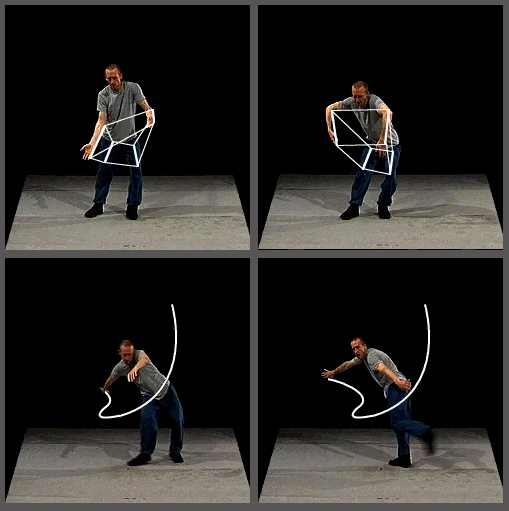
Artworks aren’t static objects although they share the quality of being describable much like mathematical objects or can be decomposed into statements like any theory. But the fact that there is no strict and precise way to interpret an artwork, instead it offers narrow spaces of interpretation, means that accounting for an artwork with a fixed recipe-statement means to miss out on the inherent aspect – its function. The function of an artwork is instructive, like choreography for thought. It is instructive for both the artist making it – who seeks to establish, discover and unravel relations among elements in the artwork, thus turning these into coherent logics; but also instructive for the audience – who insofar as they are able to decode the pattern, allow it to choreograph their thought processes by means of eliciting similar aesthetic and thus sensorial associations as those experienced by the artist. And these associations, the vibe of the work, is not the mood of the artist, but the way we mentally compose an object from patterns discerned in the real world. The vibe/mood then is only an entry point, but it is an asymmetric one: for an artist all arrangements lead to a particular mood as a summary and generalization; for the audience all conclusions and interpretations lead from reading that mood and unraveling the generalized into particular. Yet, in both cases a vibe/mood is constructed.
Therefore true invention consists not in recombining existing ideas into a new whole, although its a legitimate approach – a genre work, where novelty is not pursued, like in commercial production or art as assets, sketches, illustration. Invention means invention of a rule which transforms what it is applied to. An artist invents a rule, applies it, incorporates the result, modifies the rule, applies it again etc.
But where does the rule come from? How is it itself invented? I have yet to formulate a precise mechanic for it, but it appears that a rule is the result of a hypothesis applied as inference to existing knowledge, ideas, and objects. Accepting such a hypothesis and building up another leads to a sequence that is like building a bridge into the unknown, supported only by hypothetical supports, occasionally touching down here and there, but hopefully arriving eventually to a point of grounding. Accepting one hypothesis and building up on it towards another, even if the prior one will eventually dissolve. When such hypothetical constructions become an intersubjectively used niche, such as with genres or styles, they also become Search Spaces which narrow down the spectrum of possible interpretations – allowing to discern a difference between styles, but also limiting the context within which ideas embedded within such a niche make sense.
We come to a museum and indeed encounter guards minding that the audience neither touches the displayed artifacts, nor speaks too loudly. We find the seats in cinema to be attached to the ground in almost all cases and surprisingly find most of the audience stare at the projection screen in darkness for hours. And although I’ve heard an argument multiple times that no force stops me from reading the book by turning its pages in a given order from 1 to 100 and read the text in that order as well, almost all codex books are designed deliberately in this pattern. While we are mostly free to behave in any way while in certain social context of presentation, if we wish to extract the encoded from the encoding patterns of art within a discipline, genre and media – we have to narrow down the spectrum of all possible meanings and actions, and follow the rules to establish a Search Space.
A painting is not an object, but a set of instructions – rules of looking at objects. A physical object we call a painting is an object that is made to carry these rules embedded in itself through being made according to them, thus aesthetically apprehensive. It is something like distributed computation, wherein certain tasks and functions are unloaded onto external prosthetic devices to lighten the load of the task for the computer. In this case such material surrogates for thought are art. But we can look at any surface as painting. What changes within art context isn’t the surface itself – although that can be changed too, but the way we look at it. Thus an idea of looking at something as a painting could be considered a hypothesis, because whatever we say about the contents of it or build a whole discourse on painting, it will be reliant on adoption of such a general hypothesis as painting. Therefore the art discourse of painting at large is built upon such hypothesis-upon-hypothesis, niche within niche and Search Space within Search Space assumptions which are widely adopted by many people.
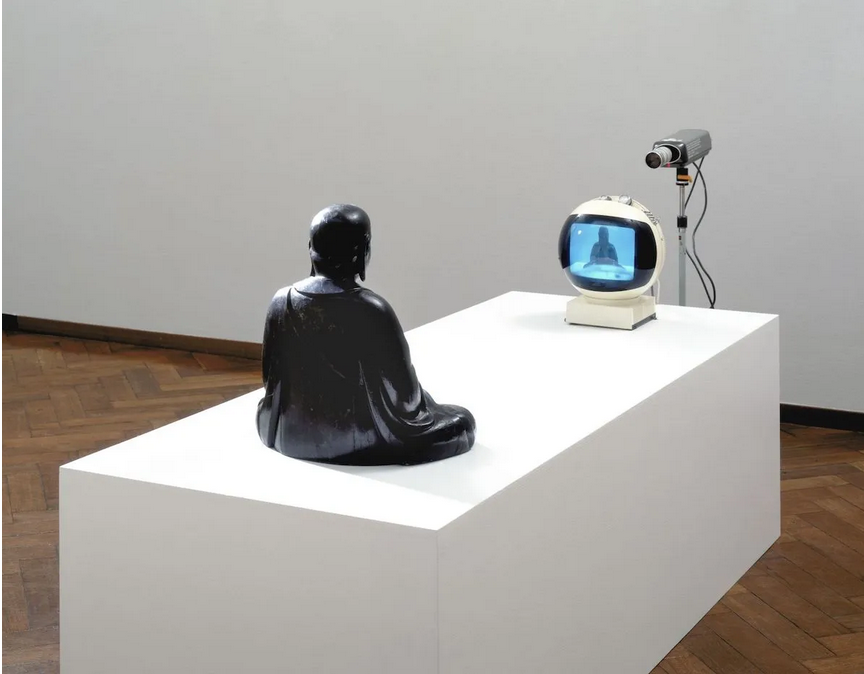
8. Possibility of change from within the niche, worldmaking critique.
The dependency of art on such patterns of rules, often manifested in centuries old institutions (in social, not architectural or organizational terms) becomes even more obvious when we are confronted with cultural artifacts completely alien to us. To read a fragment of a text on an ancient papyrus requires knowledge of used language, but if that is a fragment of a poem, then it is likely that further and wider knowledge of that culture will be needed. Despite their dramatic and highly conservative limitations, it is only because of intergenerational continuity of practice of disciplines that we are able to access certain ancient works – because institutionalized discipline contains the rules of practices which constitute the context within which the shown, staged and played works are meaningful. We don’t have to be present or involved into such institutions to carry on with their rules, but we still have to recognize that for better or worse many of such rules cannot be put in practice extrainstutionally.
Such compartmentalization raises a number of questions, the most interesting of which pertains to the rare but still ambiently present ambition of art from the early 20th century – that of potential for social change through art and political relevance of artworks generally. A number of conceptual avenues in this: art as a lifestyle, art as a tool, art as experimental politics. By the year of 2022 it should be clear that in particular contemporary art is invested into its own economy too much to take its “political” manifestations, made in a safe space, seriously. Without a doubt, the relations among those in the art scene are very much a continuation of larger social and political processes, but the artistic ambition isn’t mere isolation of achieving the position outside all classes. The idea is to produce work and build lifestyles within art for export outside and to influence the general from the position of the local.
However, a more serious problem for any art as experimental politics is its reliance on the rules constituting art goes against the ambition of social change potentially dissolving such rules. What remains is art as a lifestyle, a lifestyle itself dependent on a society arranged in a way that provides the possibility of making, showing, exchanging and living off art.
Thus the idea of art as a platform for experimental politics in concrete means counterfactual modeling and “worldmaking”. But it is notable that worldmaking in the art is meant in a much looser sense than for example a robust formulation by Nelson Goodman. Where to artists and the market, any literary universe, franchise or discernible arrangement (like a music album) of elements in a particular way is already sufficient for worldmaking, to Goodman this would not count even as a version of an existing world. There is a crucial, but often elided difference in the philosophical formulation of nominalism and the very liberal popular understanding, on which the idea of art as testing grounds for new points of view potentially projectable onto the actual world rests.
For Goodman, a world is a totality of an episteme (an all encompassing worldview from inside, from outside seen as a Wittgensteinian lifeform) that is robust enough in its grasping of the real as to become a paradigm, a stage in the development of Hegelian Spirit. But a version of the world is an internal variation on that world, where the existing linguistic, scientific, artistic frameworks are seen as nature and the particular hermeneutics branch into a version. In this formulation, fictional worlds such as a fantasy novel, wouldn’t qualify as worlds or versions, because their arrangements are dependent on compartmentalized existing rules of which a particular version of a particular world is constituted.
The dependency of the most esoteric fictional world on natural language and concepts of the actual world is a sign that art is only ever meaningful if it is not completely original, for otherwise we lack a point of entry. In other words, while it is possible to achieve a totally original way of encoding information, it is not desirable to encode totally original information. Here once again we see the difference between mathematics which can proceed merrily to bootstrap itself within a closed volume of its own formal dimension, and art which comes close to having its own closed volume of discourse (eg music that is built upon music, literature that comes out of literature, painting is its own discourse etc) but loses its value when its original structures of encoding are seen as purely empty “formalist” constructions which are meaningful only in application and as seen through the conceptual lens of socially constituted context of art.
But of course none of this closes the door on the modal possibility of finding a path from aesthetics to ethics, from art to politics. We could look at art as a field for construction of virtual prosthetic formalisms which extend our epistemic capacities, which perhaps could lead us to a point of reconstitution of our point of view, which is where ambitions of art come close to theory. Moreover, at least in the cases best suited for extremism studies, the cases where a purely fictional construction created according to the logic of maximizing titillating sensations seeps into the actual politics, occur. Yet in my view such a path is bound together with the questions of value theory and reification in the actual world, rather than with the free play of unrestricted theoretical nominalism.
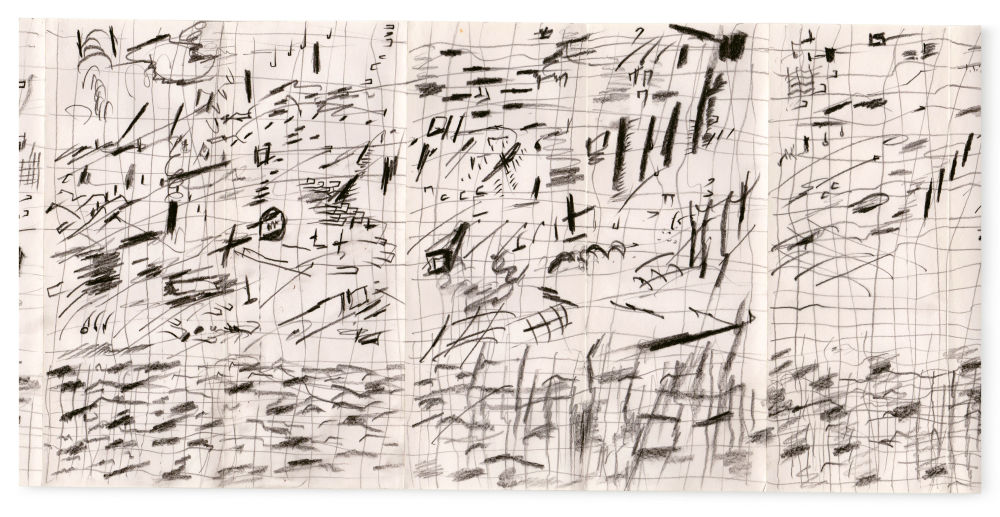
9. Impossibility of a determinate program of art
The final proposition in the program for the formal system of an artist is to explicate the process of making art and in particular of what’s colloquially called “creativity”. It would take an entire encyclopedia to list all the existing definitions of art making let alone creativity, but that is not my goal here. Still, we can roughly estimate that a significant development has occurred since the times of Ancient Greece, where inspiration (we still use inspiration as a term approximately meaning the desire to match the world to its conceived model ie the urge to impose what is not on what is, but my point is that this urge is constructible) was a matter of divine contingency potentially occurring to anyone and towards today when inspiration is a matter of arranging one’s own mental workspace through compiling a canon of references and existing works – until recently, a highly professionalized practice, which has now become widespread on the internet platforms as an activity in and of itself. (see tumblr for instance or tiktok for a more advanced and compressed form, same with twitter shitposting genre, all of which are preceded by calibrating yourself or getting inspired by specific type of content on the platform and then producing similar one)
It is within this digital landscape where every artifact can be quantified, because it is already in a sense pre-filtered from the real world by means of being present online, that aesthetic theories like the above mentioned theory of vibe become salient. This isn’t limited to artworks either, which is why aesthetics become a more and more politically notable concept. If we can quantify the elements constituting the sense of “noir” film, online we can quantify “the type of guy” by enumerating the particular artifacts resulting from the online behavior, and thus have aesthetic categories of the human, even if these are ironically stated. A similar operation is possible in an offline daily life, but we are much more likely to have types of guy by their smell or shape of the chin or sway of the hips during walking rather than through statements and decisions they make. It is an important leap of an essentially aesthetic apparatus into one that works with prearranged information through online representation.
Within this theoretical view, creativity becomes a very concrete term signifying a combination of existing elements and maximizing their affective qualities, therefore choosing such elements that are most aesthetically titillating and most compact structurally, while triggering the largest amount of sensations by association. Suspiciously, such a combinatorial approach inches close to axiomatic thinking: if we put a few unrelated but aesthetically titillating elements together in a blender, how many possible meaningful combinations will arise? Ideally, if we choose the most concise one i.e. the shortest possible function that gives rise to the maximum possible aesthetic associations, we get a good artwork. Put differently, combinatorial approach to art making has the form of “logical consequences from a set of sentences/elements X” and with a criterion of complexity encoded in simplicity, it appears to be much more than a brute force method of combining things at random.
Although the idea of building the foundations of mathematics within a formal program envisioned by Hilbert through a limited number of axioms has foundered, it has found its way into philosophy. As Mark Wilson shows6, the historical foundations for using axioms to build and account for theories is problematic for a long list of reasons, not least the overt idealization of models and arbitrary choice of what to include within a model, which axiom to posit and which to exclude. More importantly for art, axiomatic thinking has a long history as a philosophical mode of bracketing arguments within a closed system. The example of importance of foundations and unity of mathematics shows that if such a project was achievable we would be able to navigate among the whole field of pure math without worry. However, such projects also hinged on the idea of classic logic being the only true logic, one reflecting the true relations of objects in the universe, taken to a symbolic level, an argument itself dependent on metaphysical assumptions implicit in its strongest argument by Tarski in the permutation invariance thesis.7
*6 – See Imitation of Rigor: An Alternative History of Analytic Philosophy by Mark Wilson (OUP, 2021)
*7 – See Dutilh Novaes, Catarina (2011). The Different Ways in which Logic is (said to be) Formal. History and Philosophy of Logic 32 (4):303 – 332.
It appears to me that Jean Cavailles’ short treatise On Logic*8 points to the problematic of imagining a unity of sciences or even mathematics because such a proposition would be ahistorical, although not in a sense of historical facts, movements, etc but in terms of formal history. What Cavailles has in mind, and what I think uncannily applies to art – in general, within discipline and even within one artwork, – is that mathematics is a discipline of formal construction which has formal history which is a concatenation of fields, movements and logics. This makes reduction into one program and one logic an issue, because such reduction would also mean reduction in complexity as the idea is to provide a way to construct all consequences from a limited set of premises. To date, mathematics has not resolved its problem with bracketing its own system, nor has it provided a tool to enumerate all of its relations within one system (category theory seems to be the latest contender).
*8 – See On Logic and the Theory of Science by Jean Cavaillès tr.by Knox Peden and Robin Mackay (Urbanomic/Sequence Press, 2021)
But would such a move even be possible for art? Could we say that all art is developed from a similar set of conditions towards quantifiable consequences, with clearly defined logic? It would be possible to argue that similarity of all human perceptual apparatuses mean similar premises, that a conception of Transumweltic field of all possible experiences would also provide a means to account for abstractions of art objects as real objects, but from there on out conditions and niches constructed differ dramatically and it is a matter of recorded and maintained personal and institutional histories, without which art and the possibility of its experience disappears.
Perhaps we could at least stipulate that a single artwork amounts to a single, closed logical system. But even this is an issue. Consider a song – which consists of overlapping systematic relations: rhythm of its overall sound, words, pitch and tone of singing. Even such a simple list amounts to a very large manifold of associations arising from each “dimension” and each has its own logic of repetition and difference. And of course the song itself is a system of systems. In other words, much like any scientific discipline, a single artwork or a whole genre is necessarily a result of grafting many logics to each other and not necessarily in a hierarchical manner. Our most effective method of building such an abstract object through adhering to a most concise folding of it – a vibe/mood, does not equip us with a way to say that a sad song is both a song and sad outside of edifice of conventions which enable it to be both.
Finally one wonders in what way, if not through reduction of first order predicate logic, can we speak of axioms when it comes to non-formalized subjects. The idea of axiomatic formulation is in drawing logical consequences from premises. But mathematics is unambiguous about drawing consequences among its symbols, there is no “second layer of meaning” behind its symbols, while even a single artwork contains dimensions of interpretation, each of which leads on its own associative path even when confined within social rules according to which the artwork is read and each in turn asserting its own logic. Therefore, I consider a static and closed way of modeling such as through axioms, insufficient for art. Instead a dynamic model is needed, one that is as different as non-deterministic program is to a deterministic one. A program that modifies itself, but the substrate, the device on which it runs is the figure of an artist put into motion by a human individual.
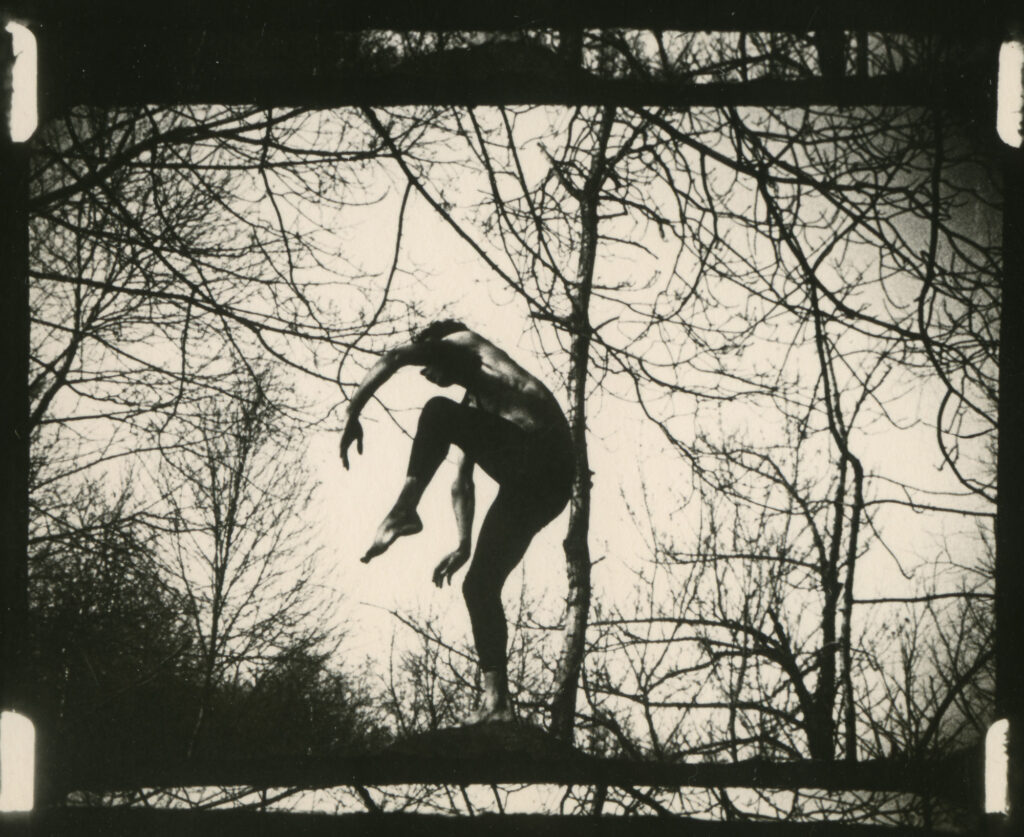
10. The technical side of creativity, non-deterministic program
The way a non deterministic program for making an artwork works is the following: an artist starts out with an idea as a rough scheme for the range of possible results of the object, then starts making it holding onto a particular mood within which such an object is meaningful. Although the way the process of making shakes out depends on the media and discipline, in abstract the process can be described as creating a coherent pattern with repeating elements each of which elicits a range of associations. This definition provides a good rule of thumb target – a concise work, which contains just enough elements which elicit complex associations but require less input than a comparable artwork which tries to describe such associations literally.
Interrelated elements form systematic relations, for example a mark by pencil on the paper repeats and through repetition forms a larger shape. Other shapes may appear but they still require repetition of some aspects. The artist keeps adding elements but they don’t always work out the way they’re conceptualized, in fact a lot of the time the result differs from what has been imagined. The proper thing to do then is to incorporate the result into the scheme and instead of attempting to create an element which represents the imagined better, to adjust the imagination and the mood to the result. During this interaction the mood of an artist as a weathervane guiding the decisions gets gradually replaced by the resulting elements. As a result, the artist is not trying to represent what makes sense according to their mood, but what makes sense according to the mood of the artwork, hence the usefulness of the term “vibe” which allows to describe a “mood” without anthropomorphic constraints.
A sentence with metaphors contains more information associatively rather than a plain one. Construction of such compact multi-logical patterns is a prima facie artists job and the specific application of mechanics of creativity. A simple but meaningful sentence has a certain logic to it, but inclusion of elements such as metaphor, analogy, alliteration etc introduces a different logic that ideally works in tune with the parent sentence. It is pointless to introduce just random things, although variations on a brute force method of matching patterns always existed in art. The idea is to establish a practice that is able not only to stumble once upon a titillating combination of words, but to do so over and over again.
This dialectic way of making can be modeled using Abductive Inference9,** particularly in the reading of Lorenzo Magnani who has expanded on ideas of Charles Sanders Peirce and many others by Thagard, Nersessian, Hutchins, the latter of whom came up with the idea of experimental maps10**. For scientists an experimental map is a choreography of concepts, models and physical objects. Incorporating objects and concepts within one scheme allows to manipulate and create consistent, coherent and conclusive relations between formal arguments and objects, informal or unknown arguments. This framework helps to create a model of “creative action” that is of an action that creates new concepts, objects, artworks. A similar dynamic could be described through development of logical constructs or other formalisms (eg playing with sound may result in music, playing with movement may result in choreography, with words in poetry, where playing means choosing intuitively what feels a specific way and extending, iterating and repeating the pattern) where logic (abstract not eg first order predicate one) leads us beyond the limits of human imagination bounded by our experiential structural encoding of all semanticity through aesthetic categories.
*9 – Abductive inference or cognition is a tighter, cleaner formulation of principles of dialectic which were stated first by Plato. But it fundamentally depends on the assertion of a rule.
*10 – See Abductive Cognition. The Epistemological and Eco-Cognitive Dimensions of Hypothetical Reasoning by Lorenzo Magnani(Springer Science+Business Media, Heidelberg/Berlin, 2009).
You can write a beautiful sentence, be led by its elements towards something that sounds good, then read it and realize what it means – approve of this new meaning to which you have been led mechanically, that is shuffling symbols around leads towards a new semantic arrangement. Similar principles abound in every other medium: a painter arranges shapes and colors, coming to recognize and accept their logic and developing it further, although the manipulations are physical rather than mental; a dancer finds a choreography not according to how it feels like to move but how what it looks like from outside feels like; a musician finds surprising flows and combinations, and tends to their repetition and development, almost entirely mechanically. These examples show how mechanical manipulations can reach outside the limits of imagination, but they can also be performed mentally, which is what coming up with an idea is like.
Therefore the idea of creativity is a matter of building upwards by means of succeeding hypotheses, but an object can also serve as a hypothesis. In some cases where art history has been recorded sufficiently, we can trace the path taken by artists through their entire career and sometimes down to the detail of a singular work, although hopefully I made it clear that such a singular account is inevitably dependent on being a product of a niche.
American sculptor Richard Serra provides a fitting example of progressively unbinding the internal logic of his work into a niche of his own making: massive labyrinthine arrangements of serpentine cor-ten steel sculptures as a result of unleashing (with little constraint and bigger budgets) his large scale urban area works designed for walking through, themselves an adaptation in a folded form for a confined city space of his landscape scale site-specific works in parks which were a result of stacking big chunks of steel, large scale drawings and wedging massive plates in gallery corners that came out of leaning lead casts against each other as a byproduct of his work involving throwing molten lead at walls – a particular application of his programmatic transitive verbs poetry list, that also included video art with said actions, all preceded by works with rubber belts which could assume different positions and perform different actions, and these grew out of interest with Arte Povera style unusual materials, first tried out in his exhibition of assemblages made with live and stuffed animals.
There is little connection between those assemblages (based on already internal art world premises of styles and previous works anyway) and massively indulgent steel sculptures on architectural scale, except for the artist himself*11. Serra created a narrative justification for his path, when he said that all the raw material for his work is contained in the memory of visiting a shipyard and witnessing a ship launch as the massive heavy object turned into a buoyant and floating one. It is also a particular sensorial vibe/mood, to which he adhered his whole career – to the idea of recreating the conditions within which it arises. But he also said that “work comes out of work” and indeed spent a significant amount of time working in a steel mill. Following such a biographical path reveals two aspects of artistic career: it is never an achievement of a single person but a result of interaction with environment of other agents and institutions in a manner comprising a niche ecology; yet the resulting step-by-step evolution of thinking and making work is not simply a product of circumstances, contexts as we would require at least a few more Serra’s to prove such a thesis. Something else is afoot, a process that is neither ecological determinism (an artist merely summarizes the historical context) nor an exercise of heroically liberated agency (an artist does as she pleases, is always free of circumstances).
*11 – In fact the epic legal battle against removal of his Tilted Ark sculpture is example enough that not only his work, but his thinking were by this point unbound from public one.
Similar paths can be traced not only through careers of famous artists, but through the making of any object, physical or not, that we call art. The relevance of Serra’s arriving at his most successful work example is not as a biographical exegesis or a blueprint for how to be an artist but in explication of niche construction, a process that develops historically and takes its own results as premises for further bootstrapping and revision. Colloquially, this is precisely what people refer to when they talk about artistic freedom, albeit paradoxically such a freedom is constituted through inventing constraints within an ever narrowing mental workspace. It is the freedom of a conceptual informal system of an artist, but not the individual behind it. Furthermore we do not need to know the genealogy of art we see to engage with it although in my experience this biographical, historical contextualization remains the most approachable way to enter any work or to follow its rules. We may follow the rules of a game without having a formal understanding but only acquaintance of seeing it played. We may be subject to the rule because we are on the receiving end of its application or because we do not have adequate conceptual apparatus to grasp it, or because we see it as contingent but not repeatable due to our situated point of view.
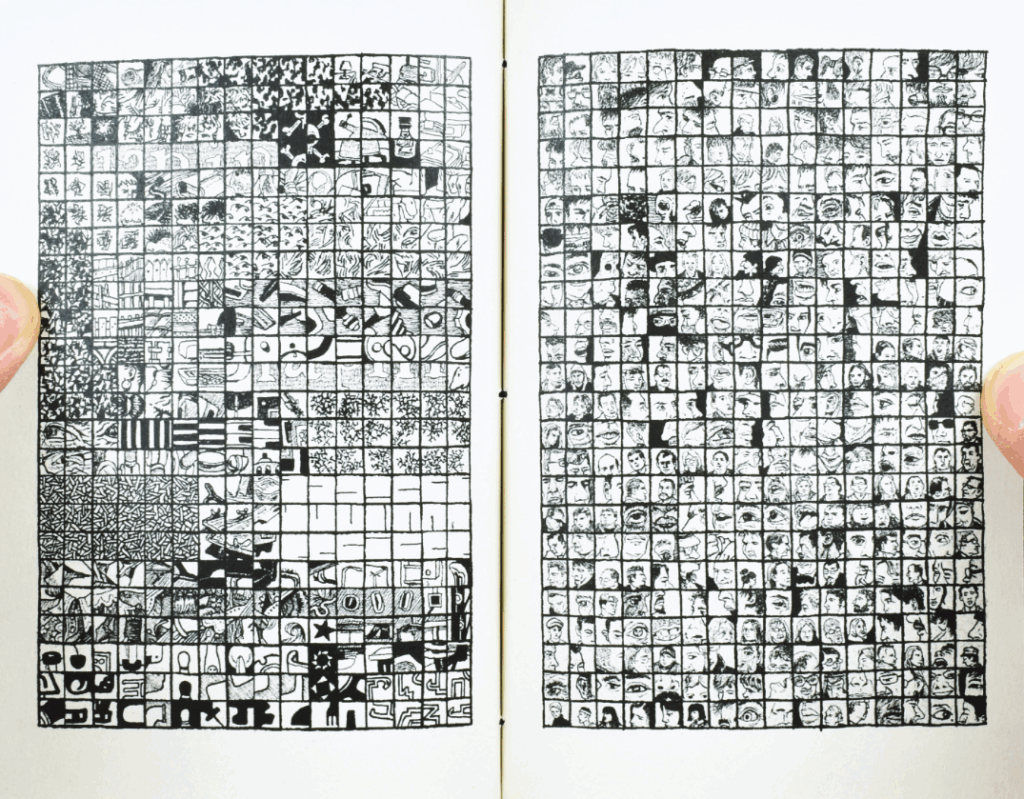
11. Unresolved questions and value theory.
Coming to the end of this outline I must acknowledge that unresolved problems remain and they aren’t trivial. The most significant problem is that of theory of value which is akin to theory of general relativity explaining the gravity of choices and decisions within the described framework coming into conflict with all the intricate logics and mechanics on the lower level of individual artworks. One approach is to relate thought to sensation as grounding, that is in order for thought not to seem like it’s spinning in the void, grasping nothing in particular, it ought to “catch” onto something and that catching is empirically affirmed, or to put it simply – felt. It is important to remember that if all our thought ultimately is either encoded or leads to sensate associations capable of triggering emotional states, then we can also reconstruct such associations mentally and have constructed experiences. In a way, that is exactly what art deals with. But this also contradicts the idea that if something feels right it is most likely right in the real world, because the edifice of any such experience is constructible.
A good artwork is like a bite of a fresh apple. It is unpleasant to imagine a flavorless world, one where culture is mere information none of which resonates in aesthetic ways. But we should still remember that the pleasure of taste is not equal to truth, even if it is all we have. Enough for an artist and often sufficient in daily life, but it does not move us even a little bit towards understanding why certain apples taste fresh or why certain political movements are paradoxically appealing.
The feeling of being right is not an indication of perceiving the hidden structure of the real in nature but the possibility of such structure within the nature of our knowledge. This is a logical, constructive possibility within our actual worldview. This is a reality akin to that of mathematicians’ understanding of platonism – not necessarily imbued with belief into immanent invisible objects but into reality of such objects because it is realistic to construct them i.e. the conditions of mathematical possibility are equated with modal possibility and thus reality.
Perhaps the true solution to the problem of the theory of value as the theory of mental gravity lay in outdated manner of modeling it through a substance theoretical position of a static model. It is no secret that many subjects change upon inquiry into them and that we lack physical tools for accessing human thought. But whenever we come up with theoretical tools to account for the contents of our minds, we inevitably also change our minds. The revolution in thinking inflected by formal logic is an indicative example of such change that also warps our understanding of prior logics. Perhaps today we are amidst a similar revolution where the volume of information accessible online necessitates its compression into vibes, where we automatically sort information into mood-domains. All of such changes are stages, perhaps in the development of Hegelian Spirit, although I’m inclined to say there is more than one, in Goodmanian fashion.
Therefore, it seems to me that a theory of value isn’t static either and what gives weight to certain thoughts but not others should have a functionalist, process based model which describes not what value or its formula is but what it does and how. Perhaps, at the end of that inquiry there is a different answer than the one I currently give to the question of whether there is a path from art to ethics and thus to social change.

12. Conclusion.
To be an artist is to invent a figure of an artist, an abstraction by which you as a person may become known, and then work for its fulfillment, ventriloquising that abstraction and meanwhile living your life in a way that is of benefit to this abstraction. One could say this is nominalism in praxis, a conscious development of a specific, unique and individual worldview. But no such informal system of an artist, no such figure exists entirely free from conventions by which it is in fact constituted. Conversely, this abstraction is meaningful only insofar as it is constructed within the given, existing dimensions which are social rules. Do artists have real freedom? Or are they merely extensions of global social currents? It seems to me that within a smaller, confined space of niches they can weave, there is true freedom. But this is not the total freedom of making both your works and life as you wish. An artist is a symbol of social boundaries and playing by and with its rules. And to find a way beyond these representational, social, genre, discipline and media conventions, we should at least be conscious of what constitutes us, as this map may be seen not as our nature, but as the artifice which is subject to revision.
by Alexey Vanushkin