Ismene: You love the impossible. Antigone: So? When my strength is gone, I’ll stop. Ismene: But it’s the highest wrong to chase after what’s impossible.
– Ἀντιγόνη, Σοφοκλῆς
1. Myth of Beau Travail
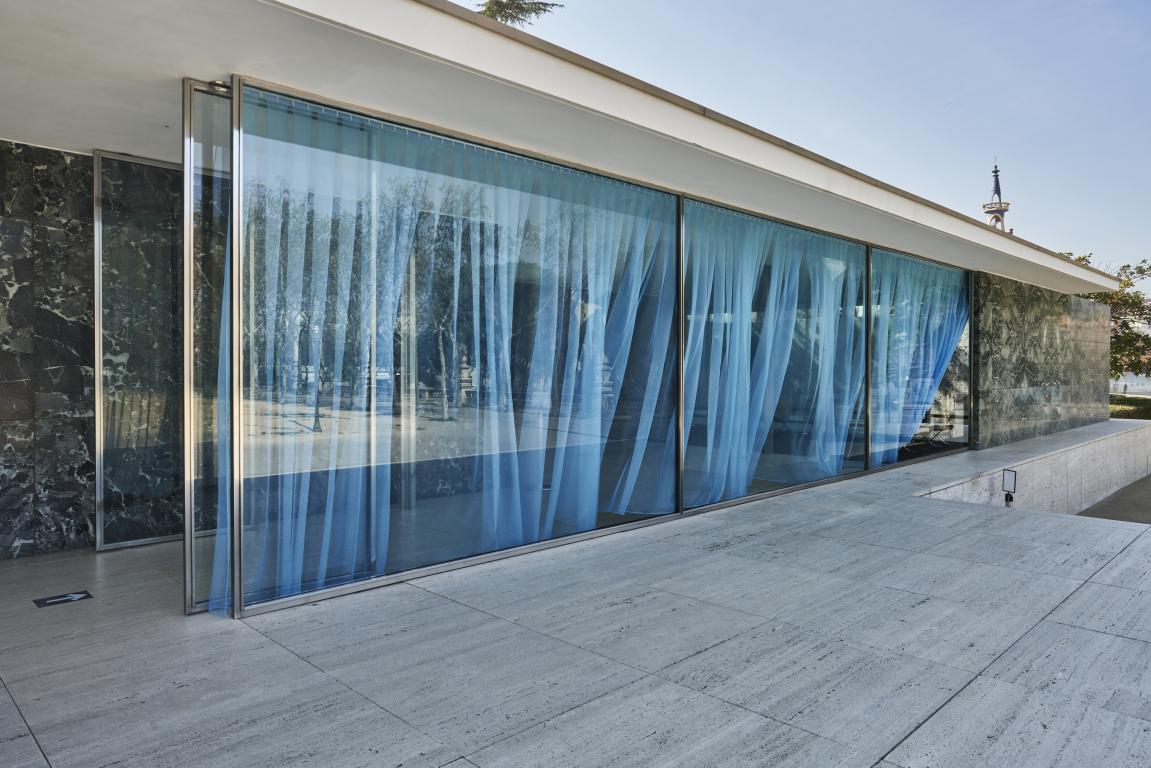
An artist moves swiftly through contexts: from one conversation to another, connecting points, networking with people, traversing classes and changing “money jobs”. An artist is a free agent – an individual capable of warping constant flow of information, engaging sets of topics on a whim, traveling the globe driven by projects, a story teller, a moral compass stretching limits of allowed and simply a person not beholden to anyone but oneself. This is a story seen played out behind the Great Vitrine of contemporary art, a glittering showcase of diverse risks and chances taken in earnest, spelled out in manifestos, professed in public talks and lectures, underlined in heavy books and critical texts. An artist weaves the culture, opens the doors and shows the way. The artist is that one who is free of contingent circumstances, not subject to laws that bind the rest of us, because she always has her art which is both key and passage.
Those on the inside of the Vitrine may think the whole world is peering in. While many come inside, some stay, some merely do a bit of window shopping and others stand in lines to museum openings or make a visit on a holiday, the number isn’t tiny, still an overwhelming majority passes by with barely a glance from the eyes corner.
On rare occasions, but consistently, evidence of scandals, tragedies and excess pop up in the mainstream media. “My child could paint better” is a charitable sum of reactions to such occasions cast like a stone into the Great Vitrine behind which many labor but few millionaires are visible. Without descending into reactionary tropes we can infer that artists are at best producing useless lint, make little contribution, aspire to wealth through doing nothing of use, not even entertaining and could be reasonably considered grifters.
Seen through a different lens, the same grab bag of stereotypes serves as a shining symbol of neo-liberal agility. An artist really is a professional able to disrupt and start up value out of nothing. A professional, though one with perks like peeing into their patrons fireplace, spill paint on canvas all night long fueled by drugs and liquor, party on grant money and still emerge from a studio in the morning on top of the market. A true bull and a manager knows when and where to bet, how to employ cheap labor, whom to milk and build valuable relationships, extracting maximum profit from little effort. All tax free.
Although considered just like us but creative, an artist could also be a tragic figure. That creativity is so opaque a process it might as well be a tough burden is really almost classless a concept. Past figures struggled alternately with monarchs, bishops, whiskey, wives, drugs, occasionally for revolution, yet in today’s world it is the political struggle for identity of young people with MFA degrees (and many viciously in debt the size of a good sized house with amenities) that takes center stage. Such artists make not so much, although occasionally also art, but make themselves. They are perhaps, in the public eye, the most deserving of support, as they embody minority struggle albeit the struggle takes place in a safe space paid for by the minority of the very rich. And so the personal success on this stage is seen as a symbolic victory for larger good.
But it is not just artists hurrying along behind the shiny vitrine of the art world, and not only artworks stand in limelight. For it is all the glamour of being an artist, including most importantly the illusion of rapid social mobility, that is available to a visitor for a modest price of a one day pass to the biennial – and without inherent risks of true participation. It isn’t so much that art made strides towards the public in the past century, but the infrastructure within which art exists. What used to be an exclusive hobby for the rich and powerful has become much more open to the public and far more profitable. The ever widening trickle-down “effect” of avant-garde visual art on commercial pop culture from fashion to corporate design has created a myriad plot holes in the idea of high-brow art, yet the aura persists and globally any member of any class or demographic can enter and take a look around. It has never been so easy to get drunk in the company of truly creative and inspiring people: artists, collectors, gallerists and unpaid interns with PhDs. Partaking in the smart and fun economy of consuming and exchanging artistic content does not require traveling to Venice, but as with fine liquor and other luxuries there are multitudes of tastes to be discovered as the visitor ascends the circles of exclusivity from a diy fair towards exhibitions, past academic talks and performances at small galleries to private pre-preview openings – refining the taste, as long as the journey can be paid for. This could be called disneyfication or the ultimate commercial act of alienation of visitors from engaging with art in earnest. But isn’t spending your own money on high culture is the earnest gesture? How else could art reach the audience at all? And is this image fair?
For their part artists have different views at the art scene, but only a handful practical options. This makes their views largely aesthetic, a decoration on following established tropes while working hard to carve out their niche. Given the lack of hope to establish or create anything that is not immediately subsumed or trampled over by the market, artistic positions towards the whole field are not a topic of collective bargaining but of personal adjustment. In lieu of shared position pragmatic nihilism prevails: art is just a platform, a network of institutions, funding opportunities and people maintaining these – all there to be used for the personal benefit and interest of an artist, who on his part is always free to leave, who does not commit to any program and who does not see any obligations towards this structure, and therefore no responsibility for anything that it does either.
The platform works, evidently – artworks are produced, shown, sold and exhibitions are attended. Thus, much of the discourse in contemporary art is built around the presumption that art is something that needs to be preserved at all costs. Whether a natural phenomena or an expression of primal emotions, a platform ripe for personal exploit or a local site of neighborly resistance, perhaps simply a lifestyle or the last decent job on the market, art simply is assumed a priori and any doubt of it risks being seen as slipping into the ditch of a reactionary attack. Therefore the question isn’t so much about the field of art itself but rather of expanding the field, while preserving the established practices. Seen from an individual position that is a question of how to make better, more effective art. And as a shared goal it is a conservative expansion – an argument for more of plenty. This isn’t only an issue of equality of participants in the cultural field or of abduction of other fields to enrich the art. A real expansion is that of effect – of art making as an effective project of changing the world. Can art change anything at all?
To consider whether such a project is viable we must first examine what is being expanded and projected. Taking this step requires abandoning both the theological assumption that art simply is which determines the limits of conversation about it and the teleology of artists concerned with “how to make better art”. Through such an examination we may be able to triangulate the function art performs as a social structure, a concept, a human activity and an experience, and through those definitions it will be clearer whether the project of art as “something more than” is possible or not.
It is not an easy task as no concrete definition can be written down for risk of being exclusionary, while the defining characteristic of contemporary art is its all encompassing shape shifting – “art can be anything” (as ambition) is derived from “anything can be art” – a market modus-operandi. We must therefore look not at particular characteristics of artworks or whole categories of such but at the conditions or operations that allow constitution and construction of such categories and their sub-categories. In other words, to speak about the future of art in any dimension we must first formalize its present in a way that accounts for the multitude of practices and their perceptions. We must also look at the palpable results of such practices and their theoretical correlation. For these reasons in this essay I attempt to travel to places, fields and topics normally considered cringe within the discourse of contemporary art.
By Alexey Vanushkin